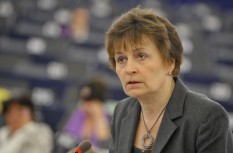
In a column, the Finnish liberal MEP Anneli Jäätteenmäki argued that, with the Danish presidency lacking political will and the Commission unwilling to compromise, the European Parliament should take three new initiatives to promote transparency on its own.
A stalled revision
Jäätteenmäki, Vice-President of ALDE (the Alliance of Liberals and Democrats for Europe) and, in the constitutional affairs committee AFCO, co-rapporteur on the revision of Regulation 1049/2001 on access to EU documents, held that transparency was more important than ever in the EU: citizens and financial markets had lost trust, and increasing transparency was a key tool for rebuilding it. She noted that the Treaty of Lisbon required more transparency, particularly in legislative procedures, and that the Parliament, Council and Commission had tried to agree on a revision of Regulation 1049/2001 since 2008 without success.
In her account, the Danish presidency had lacked real political will to push the revision forward that spring, treating it as no priority, while the Commission kept a negative attitude, was unwilling to find real compromises and instead demanded more restrictions and exceptions. The Parliament's negotiating team, led by rapporteur Michael Cashman, had worked hard to reach agreement and was ready to compromise but not to take steps backwards on transparency. The breakdown of those talks is set out in the account of how the reform ended with nobody winning.
Three proposals for the Parliament
Jäätteenmäki argued that many improvements were possible without revising Regulation 1049/2001, and that the Parliament — commonly regarded as the most transparent EU institution and the one that had been asking for more transparency — should start the changes with itself. She set out three proposals:
- Make all votes in committees and in plenary public, so that citizens could know how MEPs voted in each vote.
- Make public all minutes of the coordinators' meetings in the committees, where, she said, important committee decisions were then taken in secrecy.
- Create a new public database for the four-column documents from trilogue meetings, with documents added as soon as the rapporteur received them, so that citizens could know the institutions' positions in negotiations on EU legislation.
These, she said, were only a few simple examples of how transparency in the Parliament could be increased without revising any regulation; a full list would be long, though shorter than a comparable list for the Council and Commission. The wider procedures for requesting EU documents are set out in the guidance on how to use European freedom of information.
An appeal on the crisis
The column addressed Barroso and Van Rompuy directly, arguing that European citizens deserved a better Europe than was being offered and that taking decisions in secrecy was no solution to the crisis. Citizens, it concluded, deserved democracy, which required transparency, access to documents and decisions taken in public — nothing less.
Frequently asked questions
Who was the author?
Anneli Jäätteenmäki, Vice-President of ALDE and co-rapporteur in the AFCO committee on the revision of Regulation 1049/2001 on access to EU documents.
What three steps did she propose?
Making all committee and plenary votes public, publishing the minutes of committee coordinators' meetings, and creating a public database for the four-column documents produced in trilogue meetings.
Why had the revision of Regulation 1049/2001 stalled?
In her account, the Danish presidency lacked political will, the Commission was unwilling to compromise and instead sought more restrictions, while the Parliament's team under Michael Cashman was ready to compromise but not to weaken transparency.