The Danish EU presidency took unusual steps to promote the adoption of new access rules: member countries were summoned to conflict talks before there was any open conflict.
Bilaterals before the negotiations begin
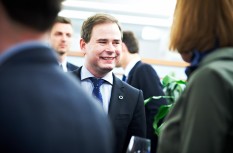
The aim was to facilitate an update of Regulation 1049/2001, the soon-to-be eleven-year-old EU rules on access to documents held by the institutions. The delayed process had gained momentum after the European Parliament voted on its positions in December the previous year, but the method used by the presidency was extraordinary. Nicolai Wammen, the minister of European affairs (Social Democrat), said negotiations would be very difficult given the very different positions both within the Council and the Parliament, and that the only way forward was a pragmatic and realistic approach: talks were being held with all actors, who were forcefully encouraged to show flexibility and a will to compromise. The statement confirmed that the presidency had held bilateral talks with every member state even before formal discussions in the Council had begun.
Normally, "bilaterals" are used late in EU negotiations as a method to single out and solve difficult questions when actors threaten to block the talks. Here they were held in order to get negotiations off the ground in the first place. "This is unusual, very unusual," said one national official who had been contacted by the foreign ministry in Copenhagen. The talks with governments one by one had been initiated out of a fear that negotiations among the 27 might quickly reach a stalemate — let alone negotiations with the Parliament.
A divided Council and Parliament
A majority of the member countries in the Council were believed to support the Commission's proposal for a new regulation. In the Parliament the situation was reversed: a majority of members was highly critical of the proposal, which they feared would be a setback for transparency. In broad terms, a loose alliance of small Nordic and Eastern countries opposed the Commission's proposal, backed by the centre-left groups in the Parliament, though beneath the surface the picture was more complicated, with the transparency alliance wobbling in the Council as representatives struggled to tell friend from foe. The individual conflict areas are set out in the account of sharpened conflicts on new access rules.
Positions in the Parliament did not strictly follow party lines, as illustrated by Anna Maria Corazza Bildt, an Italian-born Swedish member of the conservative group EPP (European People's Party — Christian Democrats). She and some 30 other members had voted against their own group in December, alongside the Social Democrats, Liberals, Greens and the Left. "Considering all confusions caused by the economical crisis, and the important decisions that have been taken recently it is more important than ever for ordinary people to be able to follow, to apprehend and to scrutinize EU's work. When people are asked to make huge sacrifices the EU must be open to them, and not only tell them what to do after decisions have been taken," she said. She also opposed the notion of transparency as an exclusively Nordic hallmark, noting that her Italian colleagues in the Committee on Civil Liberties, Justice and Home Affairs had voted with her and that access to documents did not follow a north-south dividing line.
A shortlist and a lack of pressure
After talking to their colleagues and counterparts individually, the Danish negotiators were believed to be preparing a "shortlist" of the thorniest issues in the proposal in order to start formal negotiations in the Council's Information Working Party. Whether this would help the negotiations take off remained to be seen. A problem for pro-transparency negotiators was the lack of debate and interest in the matter, which made it hard to counter the dominant opinion, even amid criticism of EU technocrats for forcing austerity solutions on member states and failing to close the legitimacy gap. One of the actors involved said there was no interest from governments and no real pressure from the Parliament to promote transparency, and that the outcome depended on how journalists acted. Practical routes for pursuing document requests are set out in the guidance on how to use European freedom of information.
Frequently asked questions
What were the "conflict talks"?
They were bilateral talks the Danish presidency held with member states one by one, before formal Council discussions had begun, in order to prevent an early stalemate in the negotiations on new access rules.
What is Regulation 1049/2001?
It is the EU's rules on access to documents held by the institutions, then approaching eleven years old, whose update the talks were intended to facilitate.
Why did the Council and Parliament positions differ?
A majority in the Council was believed to back the Commission's proposal, while a majority in the Parliament was highly critical, fearing a setback for transparency. Positions did not strictly follow party lines.