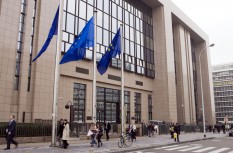
Several EU member states asked the Court in Luxembourg to help them keep their negotiating positions hidden from citizens, even after those positions had been leaked and become known. The European Parliament decided to intervene on the opposing side, to defend the right to know.
How positions stay hidden
Before laws are adopted in the EU, member states negotiate the texts in working parties under the Council of the EU. The public generally knows the agenda of most working parties, as well as the legislative proposals, which are always drafted by the Commission. But the positions of individual member states — that one country opposes a measure while another supports it — were most often kept secret until the final decisions were taken, and sometimes afterwards.
The 2011 General Court ruling
On 22 March 2011 a judgment by the General Court in Luxembourg, formally the Court of First Instance, challenged this secrecy. Access-Info Europe, an information centre and campaign organisation based in Madrid, won a victory for transparency when the Court agreed that the Council had no right to withhold documents showing the positions of member states.
The judgment stated: "If citizens are to be able to exercise their democratic rights, they must be in a position to follow in detail the decision-making process within the institutions taking part in the legislative procedures and to have access to all relevant information." The Court also firmly rejected the frequent argument that revealing positions would hamper decision-making because governments would feel bound by their own statements, observing that "public opinion is perfectly capable of understanding that the author of a proposal is likely to amend its content subsequently". The Council did not accept the ruling.
The Council's appeal
Less than two months after the judgment, the Council decided to appeal the case to the European Court of Justice. Four member states — the United Kingdom, the Czech Republic, Greece and Spain — then decided to intervene in the case against Access-Info. When a country or an institution intervenes, it takes sides and presents arguments in favour of one of the parties. No member state came forward to intervene in support of Access-Info, but the European Parliament was set to do so: a political decision to intervene had been taken by written procedure in the Committee on Legal Affairs, known as JURI, and was to be endorsed by the Conference of Presidents — the chairs of the political groups and the President of the Parliament — a step described as a formality.
A case argued on formal grounds
That none of the pro-transparency countries chose to intervene might seem surprising, but the content of the appeal offered an explanation. The Council argued solely on formal grounds, claiming that the original request by Access-Info had been made before the Treaty of Lisbon came into force, so the Council was entitled to rely on "general considerations" when rejecting it — implying that it might have a weaker case for hiding national positions under the later rules. The Council went on to contend that "the General Court committed legal errors in so far as it required evidence of an adverse effect on the decision-making process, disregarded the importance of the early stage of the decision-making for appreciating the impact of full disclosure, and failed to take account of the sensitivity of the requested document". In effect, the Council argued that it should not have had to prove that disclosure might cause harm, and that its assertion of harm should be enough.
There was a particular reason for that argument: the documents Access-Info had requested were already in the open. Statewatch, a documentation centre and civil-rights watchdog based in London, had published some of them. Pamela Bartlett Quintanilla, a researcher and campaigner at Access-Info Europe, commented: "There was already evidence, thanks to the leaking of the documents by Statewatch, that no real harm actually occurred. So of course the Court underappreciated the harm of releasing Member States names in this case!"
The sensitive subject
The subject deemed so sensitive that national positions could not be disclosed without an adverse effect on decision-making was, in fact, the set of suggestions for new rules on the transparency of EU documents.
Frequently asked questions
What did the 2011 General Court ruling establish?
That citizens must be able to follow the legislative decision-making process in detail, and that the Council had no right to withhold documents showing member states' positions on proposed laws.
Why did the Council appeal?
It argued the request predated the Treaty of Lisbon and that it should not have to prove that disclosure would harm decision-making — that asserting the document's sensitivity should suffice.
Why had no pro-transparency states intervened for Access-Info?
The appeal turned largely on formal, pre-Lisbon grounds, and the disputed documents concerned the transparency rules themselves; the European Parliament, rather than a member state, took up the case for openness.